
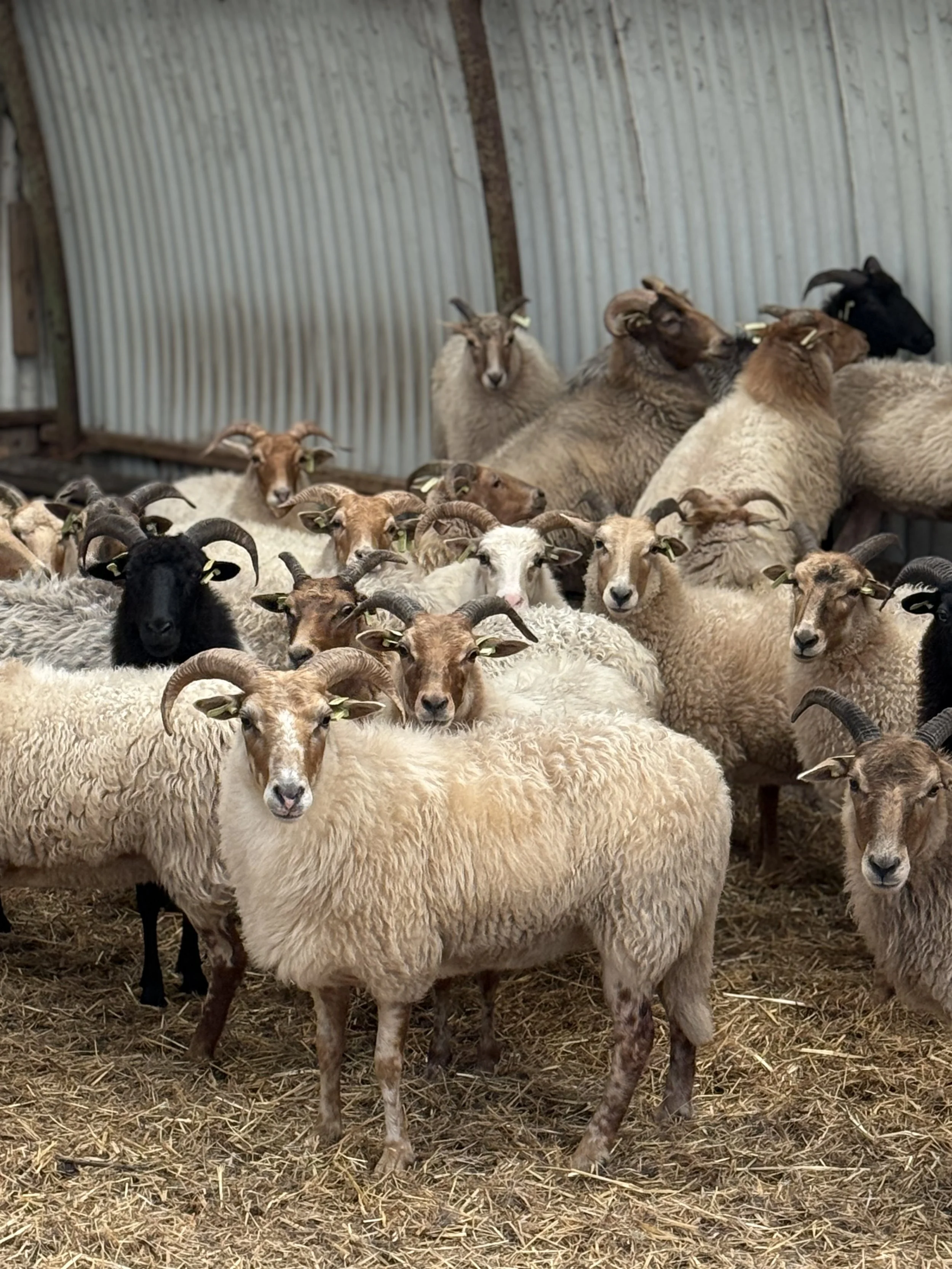
Wool, a forgotten material
Wool is one of the most underestimated natural materials today.
Once widely used, it has lost its value in a system focused on speed and synthetic alternatives. As a result, large quantities of raw sheep wool are now treated as a residual material, often discarded, burned or left unused.
This is remarkable, as wool offers a unique set of properties highly relevant to architecture and interior design. It is naturally insulating, both thermally and acoustically, helping to regulate temperature and absorb sound. Wool is breathable and moisture-regulating, contributing to a healthy indoor climate. It is also naturally fire-resistant, biodegradable and renewable.
At a time when the built environment is searching for sustainable, biobased solutions, wool presents a powerful yet overlooked opportunity.
In my work, I explore this potential by transforming raw, locally sourced wool into tactile surfaces and spatial objects. Through felting, loose fibres bind into a strong, cohesive ‘wool skin’, creating material without the need for synthetic backing or animal hide.
The resulting pieces are both expressive and functional, bringing softness, depth and acoustic quality into space, while reintroducing wool as a valuable material within architecture.